Infrastructure investment · Cadiz, California

Building California's green hydrogen supply.

A development-stage green hydrogen project with its own solar and battery storage, built to supply California's ports, transit fleets, industry and power plants. We are partnering with infrastructure investors, lenders and strategic partners for Phase 1.

Explore Illustrative imagery
Sunlight → electricity 2H₂O → 2H₂ + O₂ H₂ → ports, transit, industry Tailpipe emissions: water
Video · 60 seconds

California's clean hydrogen gap, and how Mojave Hydrogen Works fills it.

Watch on YouTube ↗

Why now

Demand is arriving faster than clean supply.

Transit agencies face a binding zero-emission purchase rule, the nation's busiest port complex is pricing diesel trucks out, refiners pay for low-carbon fuel, and power plants can now earn renewable credit for burning green hydrogen. In-state production of clean hydrogen at commercial scale is still minimal. Early producers with their own power will set the market.

Transit

Zero-emission buses are required

California's Innovative Clean Transit rule requires every transit bus purchased from 2029 to be zero-emission, with fully zero-emission fleets by 2040.

Ports

Diesel trucks now pay to haul

The Ports of Los Angeles and Long Beach charge cargo owners a fee on containers moved by conventional trucks and target a fully zero-emission drayage fleet by 2035.

Power

Green hydrogen now counts as renewable power

Under SB 1350, signed in June 2026, electricity from plants burning at least 20% green hydrogen counts toward California's Renewables Portfolio Standard. Los Angeles is converting its Scattergood plant to run on hydrogen.

Supply

Clean hydrogen is scarce

Almost no clean hydrogen is produced in California at commercial scale today. Projects that control their own power and water are positioned to supply first.

See the market data: demand, prices and the port truck gap →

~2 million tonnes of hydrogen a year. Almost none of it clean.

California's existing hydrogen use, mostly in refining, before a single new truck or bus. Clean supply starts by replacing it.
See the market data →

The project

Phase 1 at Cadiz

A solar-powered green hydrogen plant on the Cadiz campus in California's Mojave Desert, with land, water, and a clear path to permits.

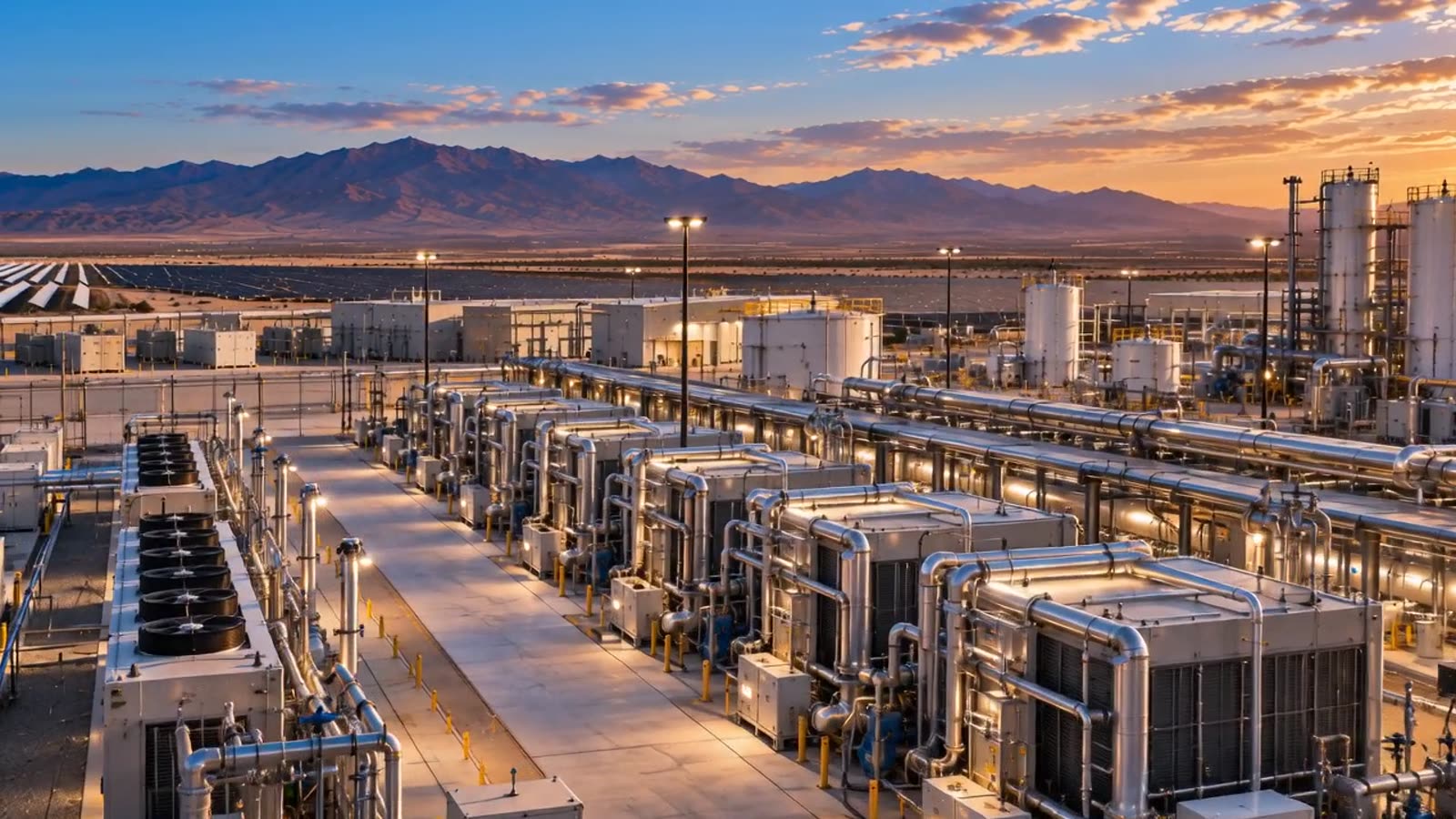
Rendering of electrolyzer modules at a desert hydrogen facility at sunset
Illustrative rendering

Sun, water, and room to grow.

Cadiz Valley · Mojave Desert · California

The site pairs a dedicated solar field and battery storage with electrolyzers, so the plant runs on its own solar power, with batteries carrying production through the night. Remote land means no neighbors to disrupt and space for future phases, including ammonia production and on-site power for data centers.

Development stage · Permitting underway
Electrolyzer capacity
40 MW
Solar
130 MWdc
Battery storage
350 MWh
Hydrogen output
~4.0M kg / year
Product
Green H₂ (solar-powered electrolysis)
Water
Secured on campus
Primary markets
Ports · transit · industry · power
Federal incentives
§45V · §48E

The platform

One site first. A green hydrogen platform after.

Mojave Hydrogen Works is the first phase. Each step builds on the same land, power, and water.

Phase 1 · Now

Green hydrogen

Build and operate Mojave Hydrogen Works for California's ports, transit and power plants.

Phase 2

Ammonia & fertilizer

Convert green hydrogen into green ammonia for domestic agriculture.

Phase 3

Renewable power for data centers

Supply firm renewable power from on-site solar, storage and hydrogen to computing on the campus.

Phase 4

New sites across the West

Repeat the model in Arizona, Nevada, and beyond.

Explore the platform: ammonia, data-center power and new sites →

Markets we serve

Seven buyers, one supply point.

Cadiz sits on the I-40 freight corridor between the Southern California ports and the interior West, within reach of the state's largest hydrogen users.

Explore the market data →
Unmet demand · San Pedro Bay

The busiest port complex in the U.S. is going zero-emission, and needs the fuel to get there.

2035Ports' target for a fully zero-emission drayage truck fleet
$10/TEUClean Truck Fund rate on loaded containers moved by conventional trucks; zero-emission trucks exempt
2030Target for zero-emission cargo-handling equipment at the terminals
600+Zero-emission vehicles operating across the port complex today, against a goal of the entire drayage fleet
POWER GENERATION · NEW UNDER SB 1350

Utilities converting gas plants to hydrogen

As of June 2026, power from turbines burning at least 20% green hydrogen counts toward California's Renewables Portfolio Standard. Utilities modernizing gas plants for firm, clean power, starting with LADWP's $800 million Scattergood conversion, need green hydrogen from outside producers.

PORTS & DRAYAGE

Port trucks and terminal equipment

Fuel-cell drayage trucks and cargo-handling equipment serving Los Angeles and Long Beach, where long shifts and fast refueling favor hydrogen.

TRANSIT

Fuel-cell bus fleets

Transit agencies converting to zero-emission fleets under state rules, especially long routes where fuel-cell buses outperform batteries.

HEAVY TRUCKING

Freight corridors

Long-haul and regional fleets on the I-40, I-15 and I-10 corridors that need range and payload batteries cannot yet deliver.

INDUSTRY

Refining and industrial hydrogen

Replacing fossil-derived hydrogen used in refining and industrial processes, where California's Low Carbon Fuel Standard rewards lower carbon intensity.

AGRICULTURE

Green ammonia and fertilizer

Phase 2 converts green hydrogen into ammonia for domestic agriculture, reducing reliance on imported nitrogen fertilizer.

PUBLIC FLEETS

State and local government

Public agency fleets that remain under California's zero-emission fleet requirements, along with their contractors.
Sponsorship

A focused sponsor team with established partners.

Mojave Hydrogen Works is sponsored by its founders together with an experienced project developer and the site's landowner. Partner details are shared with qualified parties under NDA.

President

Angelina Galiteva

Hydrogen markets, offtake, and California clean-energy policy.

LinkedIn
Chief Executive Officer

Jason Thompson

Project structuring, capital formation, and platform strategy.

LinkedIn
Development partner

International renewable energy developer

Leads permitting, engineering, and development of the Phase 1 project.

Site partner

Landowner, Cadiz campus

Provides the land and water resources that anchor the project.

Meet the sponsors →

Explore

Go deeper.

Partner on Phase 1.

We are speaking with infrastructure investors, lenders, offtakers and strategic partners. Qualified parties can request the investor deck and data room under NDA.

Information for investors →
Contact Jason Thompson
Connect on LinkedIn